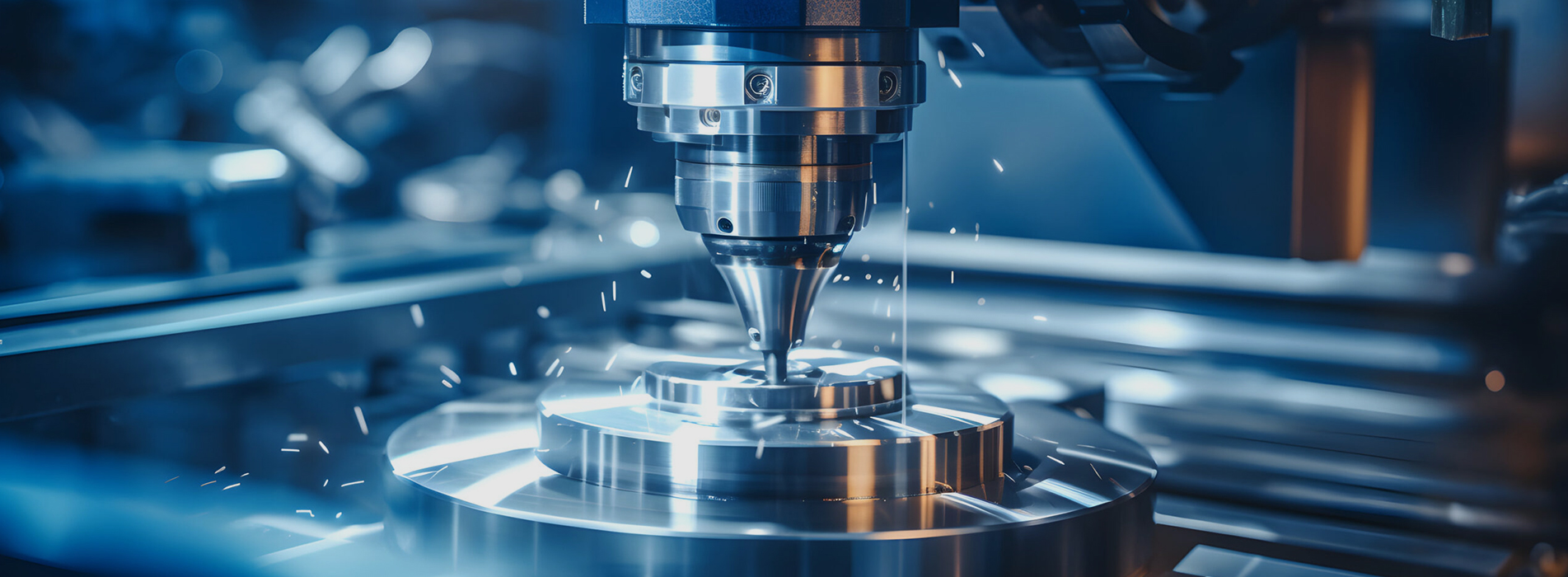
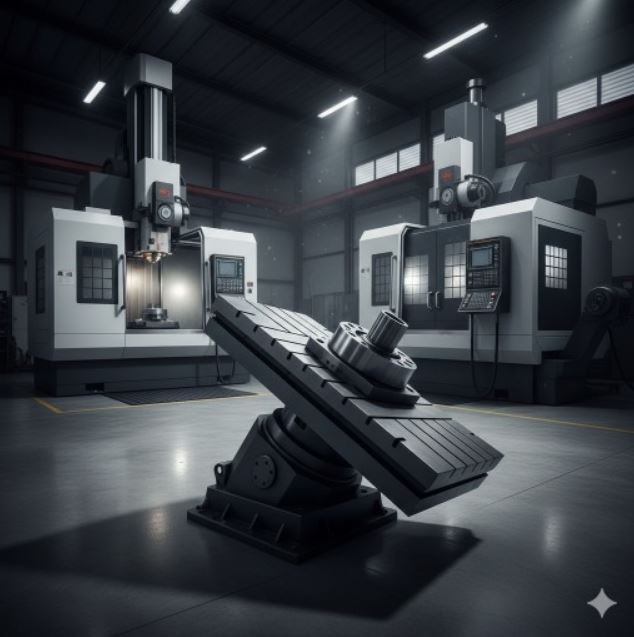
Most shops start here. Vertical machines are what people picture when they think of a cnc mill. The spindle points straight down, gravity helps clear chips, and setups are fast.
A common design is the C-frame structure. These machines are compact and efficient, but once you push into large parts, the spindle overhang and machine footprint start working against accuracy. Lines like Hwacheon's VESTA series or SIRIUS-650 / 850 / 1050 show where vertical designs shine before size becomes a problem.
Horizontal machines flip the spindle sideways. That sounds simple, but it changes everything. Chip evacuation improves dramatically, tools last longer, and cutting forces get distributed more evenly.
Shops that live on high-volume cnc milling work prefer horizontals because they can run longer and more aggressively without babysitting the process.
They cost more, but they earn it back in stability and uptime.
This is about movement and access, not speed.
3-axis machines handle flat work, pockets, slots, and profiles.
4-axis adds rotation, useful for cylindrical or multi-sided parts.
5-axis is where complexity lives: compound angles, impellers, aerospace parts, and molds.
When people talk about advanced cnc mill capability, this is what they mean. You're buying freedom of geometry, not just speed.
When parts get truly big, normal frames stop making sense.
That's where double-column or bridge-type machines come in. These designs put columns on both sides of the cutting area, creating massive rigidity. Smaller high-precision versions also exist, built not for size but for stiffness and repeatable accuracy.
Machines like Hwacheon's SIRIUS UM+, UL+, UX, and 1250/1350/1750/2500 series, along with L1 and L2 models, live in this world.
These aren't for simple brackets. They're for molds, dies, aerospace tooling, and parts where surface finish and geometry are measured in microns. That's the level of cnc milling these machines are built for.
The price of a milling setup isn't random, and it isn't just brand markup. It's engineering choices stacked on top of each other.
A small cnc machine milling machine built for plastics, aluminum prototypes, and low-load work lives in a different world than a machine designed to hold micron-level tolerances in hardened steel. Same general shape, completely different internal DNA.
What actually drives the cost up or down?
Accuracy class. There's a massive jump in price when you move from “good enough” to “precision-critical.” A machine that can hold ±50–75 microns is treated very differently from one expected to hold ±3–5 microns all day.
Machine rigidity. Heavier castings, wider linear rails, box ways, and thermal-stable frames don't look sexy on a brochure, but they double or triple the base cost.
Spindle system. An 8,000 RPM spindle is cheap compared to a high-torque, high-speed system designed to keep stable cutting pressure in long cycle runs.
Control system. The quality of the CNC brain matters. Higher-end controllers don't just move axes; they predict vibration, compensate for thermal drift, and maintain tighter path control.
That's why two machines with the same travel size can land in totally different price brackets.
Rather than guessing from brochures, here's what pricing usually looks like in the real world.
Entry-level machines are about access. These are for light production, prototypes, soft materials, and learning environments. A budget cnc machine milling machine here is more about movement than muscle.
Mid-range machines hit the sweet spot for most job shops. They can handle steel, decent batch runs, and regular accuracy demands. This is where most parts that get labeled “precision cnc milled components” actually come from.
High-end industrial machines aren't just faster. They're built for repeatability under stress. Climate-controlled components, ultra-smooth ball screws, thermal compensation systems, and ultra-rigid structures all live here. This is where the million-dollar numbers start showing up.
At scale, a 2-meter X travel machine with moderate tolerances (50–75 microns) typically lands near the lower six figures. Tighten that tolerance to 10–15 microns and you jump into the mid–high six figures. Push into true ultra-precision territory, and prices can move into seven figures without being “overpriced.”
This is where people underestimate costs.
Number of axes
A simple 3-axis cnc machine milling machine is dramatically cheaper than one with full 5-axis simultaneous motion.
Size of work envelope
Bigger travel isn't just longer rails. It means heavier frames, stronger drives, more thermal distortion management, and more floor infrastructure.
Spindle torque and duty cycle
High RPM is easy. High torque + stability + long duty cycles is expensive.
Material capability
A machine meant only for aluminum is cheap compared to one designed to chew through stainless, tool steel, or hardened alloys without losing accuracy.
Cooling and thermal control
The more accurate you want to be, the more the machine has to fight heat.
Most people look at the base price and stop thinking.
That's how you end up with a machine that looks good on paper but struggles in real work. Or worse, one that makes parts slowly, eats tooling, and can't hold tolerance once it warms up.
A cheap machine that makes bad parts isn't “saving money.” It's just moving the cost somewhere else, rework, scrap, long cycle times, missed deadlines.
The smarter question isn't “How much does it cost?”
It's: “How expensive will my mistakes be if I buy the wrong one?”
That's the difference between buying a machine and buying a long-term process.
Deciding whether to invest in a milling machine with CNC capability or outsource the work depends on your budget, production volume, and in-house technical resources.
Buying your own milling machine with CNC control makes sense if you have:
Owning equipment gives you full control, but the total cost of operation—maintenance, cutter wear, calibration, and labor—adds up quickly. Many new buyers underestimate the true lifetime expenses of running a milling machine with CNC in-house.
Outsourcing the work provides flexibility without the capital investment. You don't need to build a machining team, manage maintenance schedules, or handle quality inspections. This approach is ideal for prototypes, small batches, and companies whose workload frequently fluctuates.
We support businesses that prefer outsourcing because they want reliable results without operating their own milling machine with CNC. Our team handles programming, machining, and full quality checks so you can focus on design, production, or product development.
If you're unsure which direction fits your situation, outsourcing is often the lower-risk choice—especially when you want predictable costs and consistent quality without purchasing equipment.
 SUBSCRIBE TO OUR NEWSLETTER
WHATSAPP : +86-15375471059
EMAIL : allan@safekeso.com
PHONE NUMBER : +86 15375471059