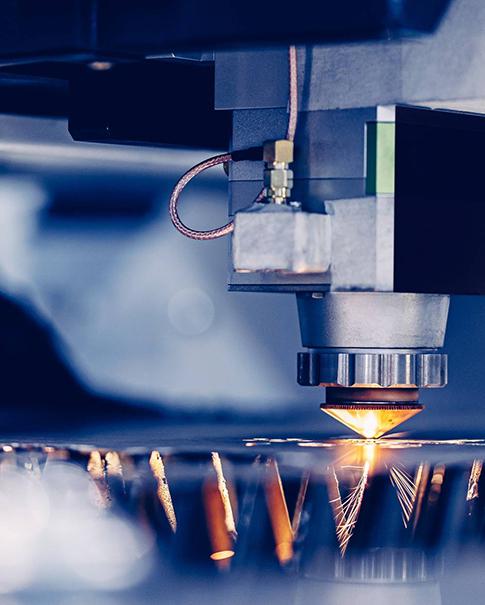
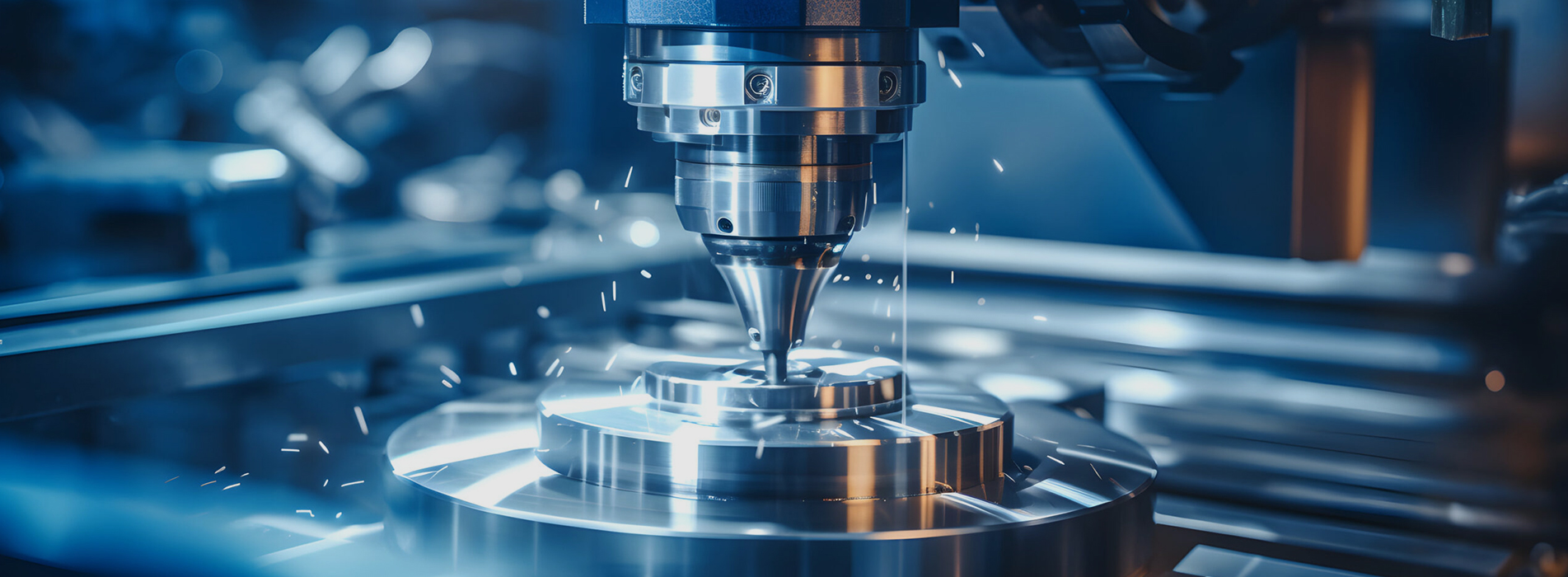
You don't Google “what is a CNC milling machine” unless something real is on the line. Maybe you're trying to build a product. Maybe you're pricing out parts. Or maybe you're staring at a machine catalog thinking, Am I about to make an expensive mistake?
The problem is that most CNC milling guides either talk like engineering textbooks or oversimplify everything until it's useless. This guide won\t do that. We'll break down how a CNC milling machine actually works, what “CNC milled” really means, and how to choose the right machine without wasting money. Confused between CNC milling vs CNC turning? Read our blog on that to clear out everything.
CNC milling is a computer-controlled cutting process. But that definition is boring and misses the point: it changed everything. A rotating tool carves material out of a solid block, creating shapes, features, and holes, but it does this because a dedicated digital system replaced levers and hand-turned wheels entirely.
Look, you design the part on a computer, you transfer the file, and the machine executes the cutting with surgical, non-negotiable precision. That is why industries like aerospace, automotive, and robotics rely on this technology so heavily. Human hands cannot consistently match the dimensional accuracy required for advanced aerospace-grade components.
At Keso, we adopted advanced CNC milling technology from day one, and our team's deep machining experience shows directly in the consistency of our finished parts. Many clients bring us components that failed tolerance checks at other shops, only to see more stable accuracy once production moves to us. In machining, you're choosing a shop's processes and expertise—and that's what ensures your critical parts are made right the first time.
Fact Check: Did you know that CNC milling is responsible for components with tolerances smaller than the width of a human hair? We are talking about repeatable accuracy down to single-digit micron accuracy in high-precision or specialty applications. It is not just better than manual. It operates in a totally different universe of precision. This capability is why the global industrial automation market, heavily dependent on CNC-machined parts, is projected to hit nearly $400 billion in the coming years. That's the kind of impact we're talking about.
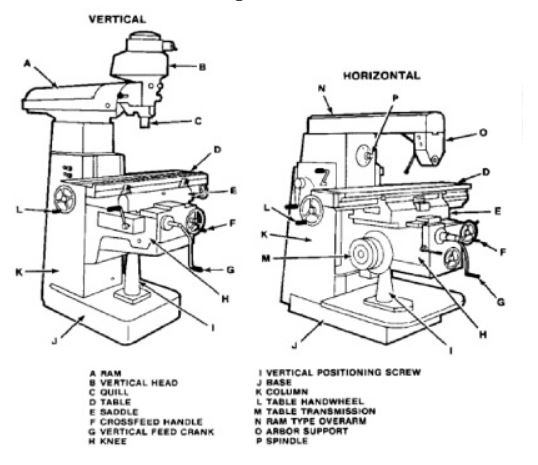
The single biggest difference between a traditional manual mill and a modern CNC system comes down to one thing: control, and who you trust to hold it.
On a manual mill, the operator controls absolutely everything. Every movement of the tool, the cutting depth, the feed speed — it all depends on that person's hand, eye, and concentration at that moment. The moment fatigue sets in, or the coffee wears off, tolerances can drift.
Now consider a CNC milling machine. The movements aren't guided by feel; they are driven by lines of programmed code. The machine executes the exact coordinates consistently, run after run. This is why, in most industries, CNC milling has become the primary method for producing precision parts.
Imagine you are ordering a critical turbine blade housing. Would you rather have that part manufactured by a system that offers predictable, repeatable accuracy down to a micron, or by a human relying on instinct?
That is the difference. A CNC mill provides:
This significant improvement in predictability and precision is why CNC milling is the dominant choice for most modern manufacturing applications, while manual milling is primarily used today for small repairs, simple prototypes, training, or low-volume tasks where ultra-tight tolerances aren't required.
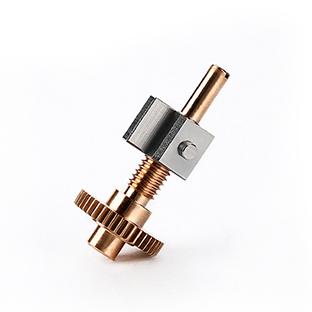
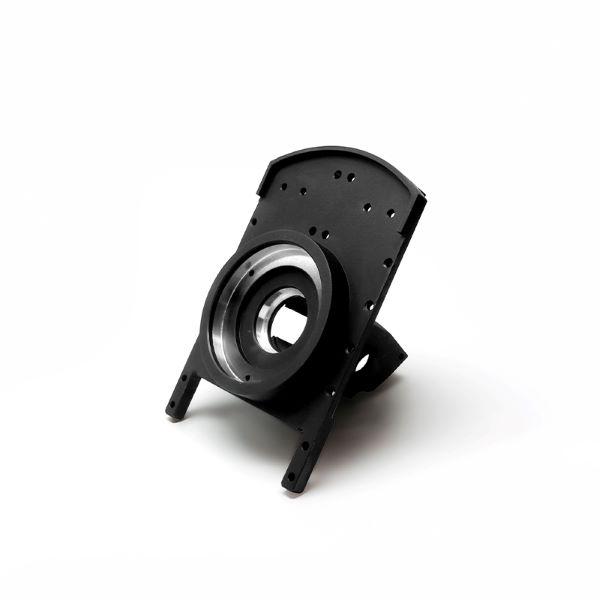
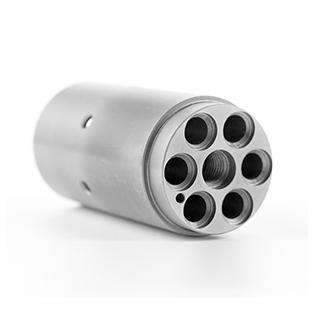
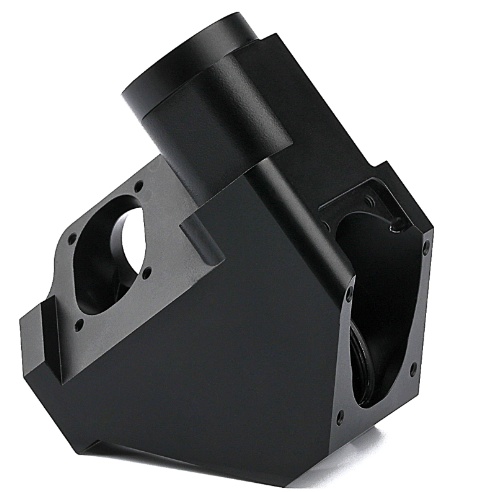
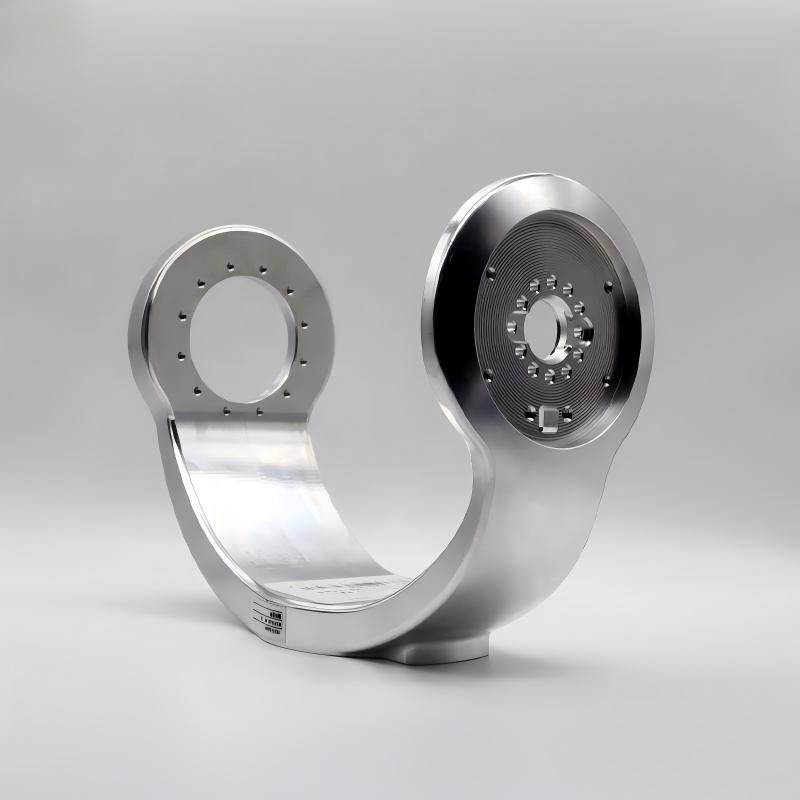
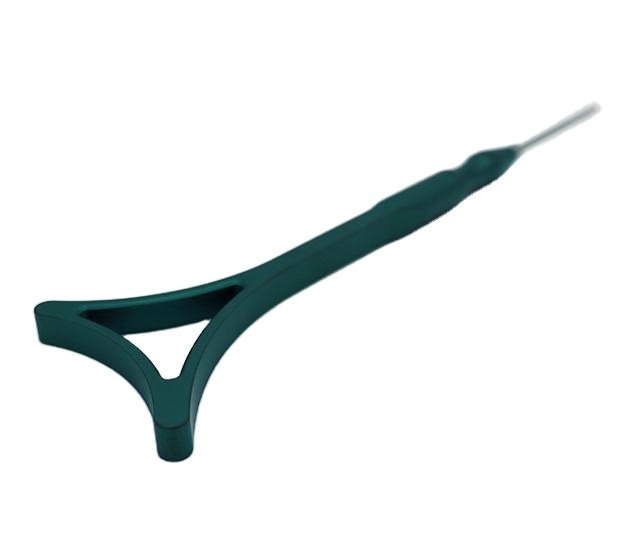
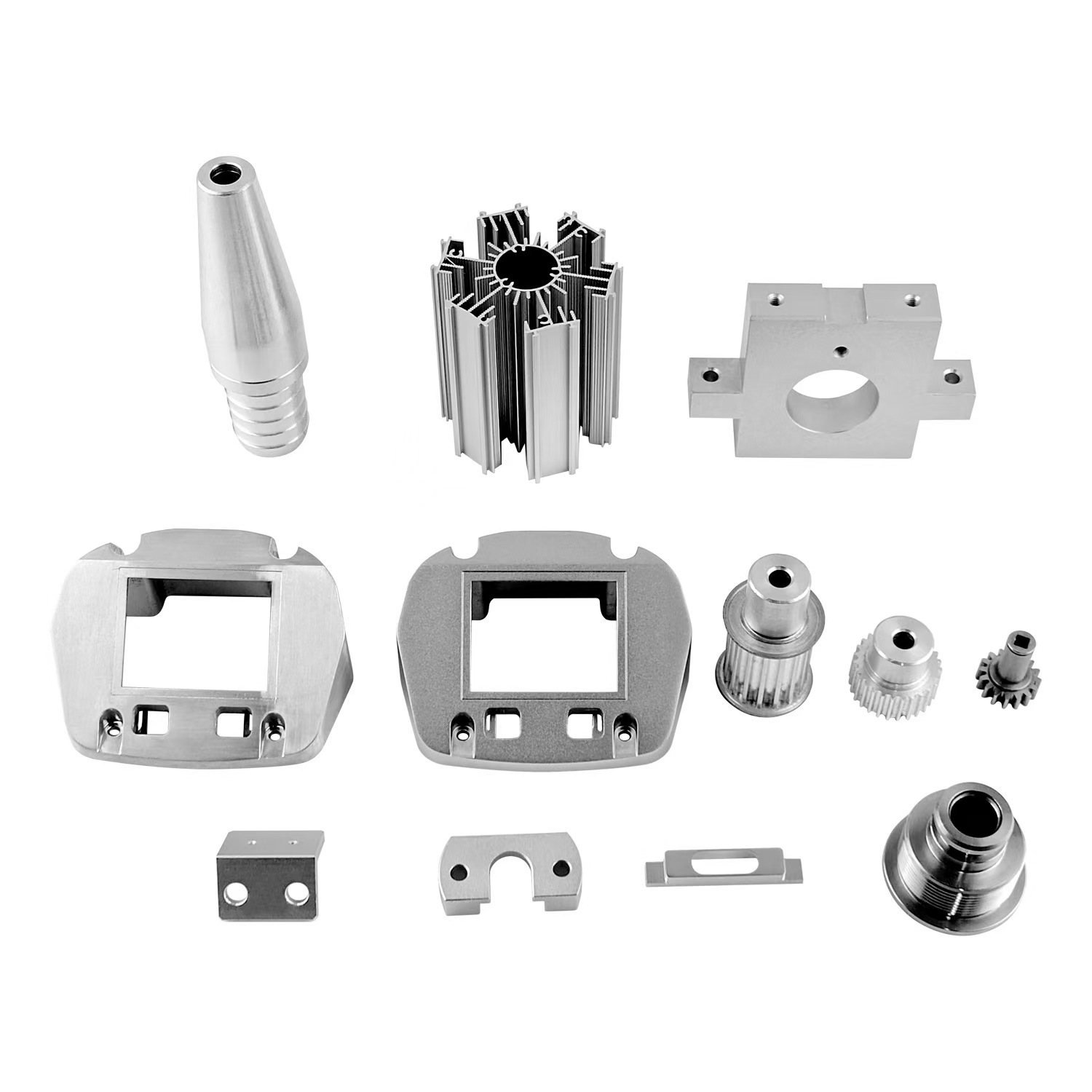
When you see a product labeled “CNC milled”, it means the part wasn't molded, cast, or roughly cut, it was carved directly from a solid piece of material using a cnc milling machine that followed precise digital instructions.
This matters because CNC-milled parts typically have:
When manufacturers switch to a milling machine with cnc, they usually do it for one reason: consistency. Every part comes out nearly identical, even at high volumes.
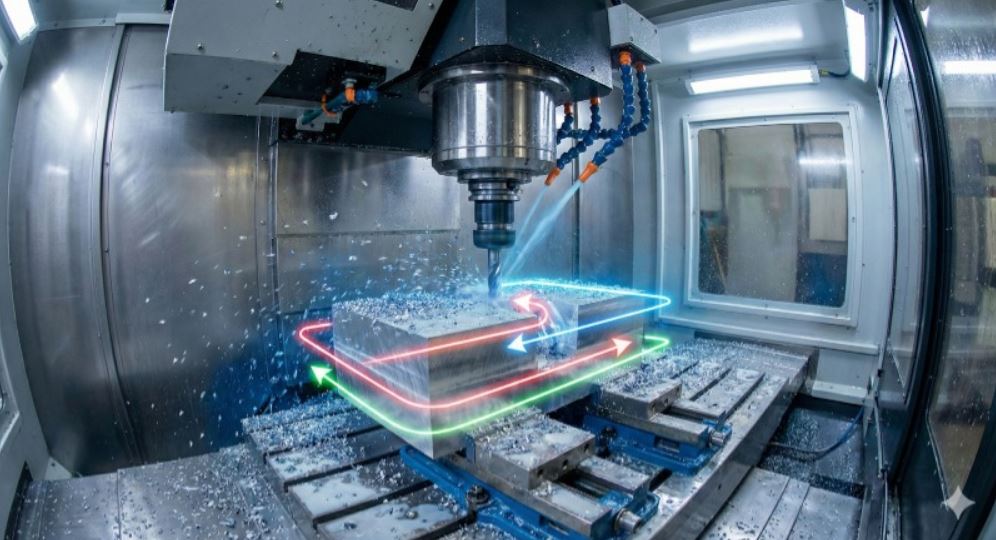
If you clicked here asking “how does a CNC mill work?” you're not after trivia, you want to decide something useful. Maybe you're trying to: pick the right machine, spot a production bottleneck, quote a part accurately, or stop throwing away scrap from bad setups. Learning how the machine operates end-to-end gives you three real powers: predictability (you'll know where time and cost hide), control (you'll stop guessing feeds, speeds, and fixturing), and troubleshooting (you'll hear problems before they blow up your run). So read this like you're about to run the first job tomorrow, not like you're studying for a test.
A CNC milling system is a ruthless precision instrument. It is a computer-controlled cutting tool designed to carve material from a solid block and achieve the exact shape you designed.That capability isn't just simple cutting, though; it requires an insane amount of coordinated engineering. The machine has to juggle spindle speed, tool motion, clearing chips, coolant delivery, and complex control logic just to make that one complicated component repeatable.
Watch the cnc milling machine when the job starts. The spindle immediately runs up to speed, thousands of RPM, depending on the material and tool, and the cutter moves into its initial spot. The workpiece sits there, clamped down absolutely rigid on the table.
The control unit is reading the G-code. This is the line-by-line script pulled directly from your CAM program. The controller instantly takes that script and converts it into tiny, coordinated axis movements, hitting coordinates down to hundredths or thousandths of a millimeter.
As chips fly off, coolant or mist is simultaneously managing the heat. The control system itself is actively correcting for backlash and any small physical deviations, ensuring the finished component precisely mirrors the CAD model.
A few things are crucial to the operation. Spindle speed and feed rate dictate everything about the cut; mismanage that combination, and you guarantee bad finish and quick tool failure. The toolpath strategy, meaning how you rough the shape versus how you finish it, determines the total force and heat the tool endures. And finally, clamping. It's the most basic step, but getting it wrong is the single fastest way to scrap an entire expensive batch of parts.
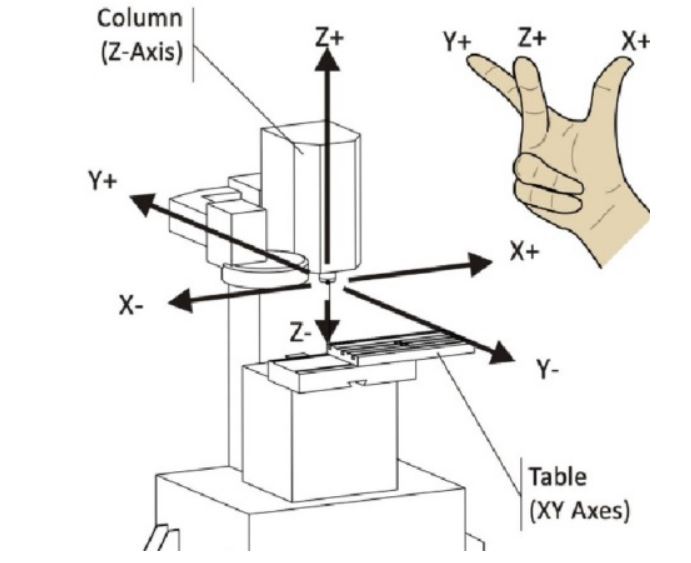
A basic mill moves a cutter in three linear axes: X (left–right), Y (front–back), and Z (up–down). But that's just the start:
If you stand beside a modern 5-axis cnc mill during a complex job you'll notice the machine flows in smooth arcs rather than jerky steps; that's simultaneous-axis motion doing the heavy lifting. The difference is not just sexy motion, it's fewer setups, a cleaner finish, and parts that come off the table closer to spec.
Have a deeper look into how CNC mills work in the linked guide!
If all of this makes CNC milling sound powerful but honestly a bit overwhelming, that's fair. Buying a mill, setting it up, dialing feeds and speeds, tooling, fixtures, it's a lot before you even make your first good part.
If you just want parts that are cut right the first time, Keso can handle that for you. We machine real production-grade parts starting from $5 per part, without you touching a machine or worrying about setups, tooling, or scrap.
Just upload your CAD file—we handles everything else.
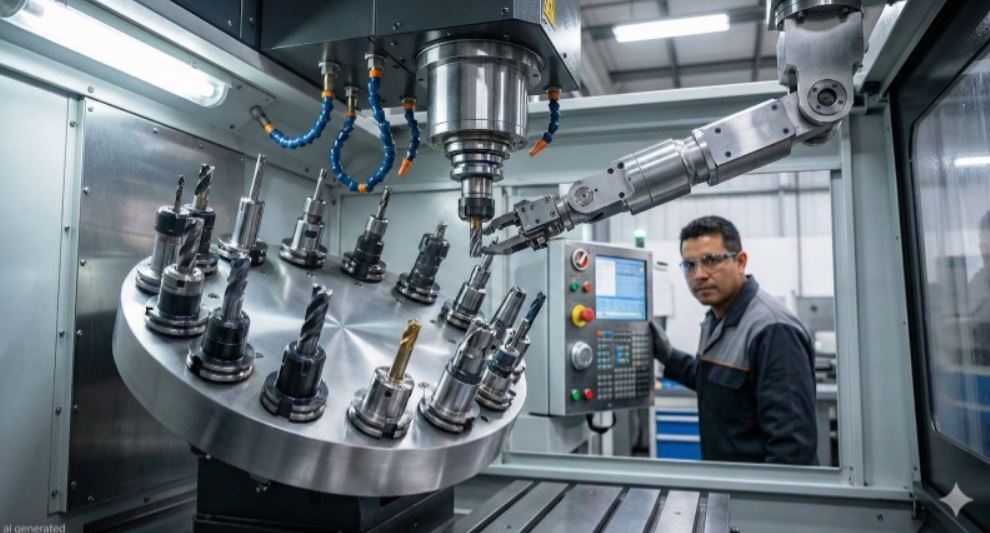
The spindle is the muscle of the machine. It holds the cutting tool and spins it at high speed to slice through metal, plastic, or composites. Spindle quality decides how smooth the cut feels and how clean the surface of a cnc milled part looks when it comes off the table. If the spindle has play or vibration, it shows up immediately in chatter marks and poor tolerances.
Modern machines don't pause for manual tool swaps. The automatic tool changer stores multiple cutters and swaps them in seconds. A good cnc machine milling machine uses this system to move seamlessly from roughing to finishing without touching the setup. This is what allows complex parts to be made in one run instead of multiple manual steps.
This is the brain and the dashboard. Operators load programs, adjust feeds and speeds, zero the machine, and monitor the cut from here. On a dialed-in cnc machine milling machine, the control panel gives real-time feedback like spindle load and axis position, so you can catch problems before they destroy a part or tool.
The worktable is where the raw material gets locked down. Fixtures, vises, clamps, and custom jigs stop the part from moving while it's being shaped. A stable setup is the difference between a tight tolerance cnc milled component and a scrap bin full of near-misses. Good fixturing is quiet, boring, and absolutely critical.
Heat is the enemy of accuracy. Coolant systems spray or flood the cutting area to control temperature and extend tool life. Chip conveyors and augers move metal waste away before it builds up and interferes with the cut. A well-designed cnc machine milling machine keeps the cutting zone clean, so the tool is always cutting material, not re-cutting loose chips.
Before you look at machines, you need to understand the tools. A cnc milling machine is only as good as the cutter inside it. The wrong tool ruins surface finish, kills tolerances, and snaps mid-job.
 SUBSCRIBE TO OUR NEWSLETTER
WHATSAPP : +86-15375471059
EMAIL : allan@safekeso.com
PHONE NUMBER : +86 15375471059