banner
  • Enhancing Precision and Performance: Safekeso's Remarkable Aluminum Parts
    Enhancing Precision and Performance: Safekeso's Remarkable Aluminum Parts Jan 06, 2025
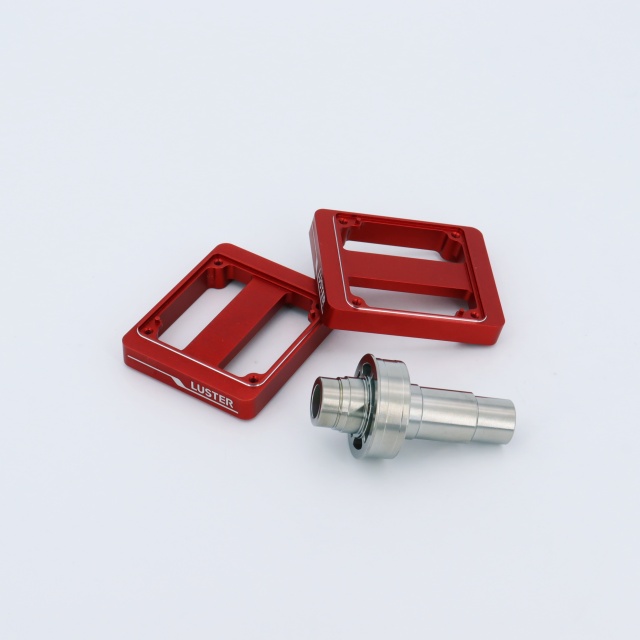
    Enhancing Precision and Performance: Safekeso's Remarkable Aluminum Parts  Introduction: Welcome to Safekeso, a leading OEM manufacturer specializing in precision machining and custom fabrication of aluminum parts. With our unwavering commitment to quality and exceptional service, Safekeso has become the go-to choice for businesses seeking reliable aluminum components. In this blog, we will explore the remarkable world of aluminum parts and their diverse applications. 1. Unparalleled Precision: At Safekeso, we pride ourselves on our state-of-the-art machining capabilities that enable us to produce cnc aluminum parts with unparalleled precision. Our highly trained technicians utilize advanced CNC machines and cutting-edge software to ensure the utmost accuracy and tight tolerances. With our precise craftsmanship, we meet and exceed the most demanding specifications, guaranteeing optimal performance for your applications.   2. Lightweight and Durable: One of the key advantages of aluminum parts is their exceptional combination of lightweight design and durability. Aluminum has a remarkably low density, making it significantly lighter than other metals without compromising strength. This unique property makes aluminum parts highly sought after in various industries, such as aerospace, automotive, and electronics, where weight reduction and performance are critical.   3. Versatility through Customization: At Safekeso, we understand that every project has unique requirements. That's why we offer comprehensive customization options for our aluminum parts. From complex geometries to intricate features, we can deliver tailored solutions that perfectly fit your specifications. Whether you need CNC-machined aluminum components for prototypes, production runs, or replacement parts, our team is dedicated to bringing your ideas to life.   4. Wide Range of Applications: Our aluminum parts find applications across diverse industries, enabling advancements in technology and innovation. Let's explore some of the notable areas where aluminum components excel: - Aerospace: Aluminum's lightweight and corrosion-resistant properties make it ideal for aircraft components, such as fuselages, wings, and engine parts, contributing to fuel efficiency and improved performance.   - Automotive: From engine blocks and transmission casings to suspensions and body structures, aluminum plays a vital role in reducing vehicle weight and enhancing fuel economy, while maintaining structural integrity.   - Electronics: The heat dissipation capabilities of aluminum make it an excellent choice for heat sinks, electronic enclosures, and connectors, ensuring efficient cooling and safeguarding delicate electronic components.   - Renewable Energy: Aluminum's strength, resistance to corrosion, and recyclability make it a preferred material for wind turbines, solar panels, and other renewable energy systems, facilitating a sustainable future.   Conclusion: Safekeso stands as a trusted partner for businesses seeking precision-manufactured aluminum parts. With our expertise in CNC machining, customization capabilities, and commitment to excellence, we guarantee remarkable results for your projects. Whether you're in the aerospace, automotive, electronics, or renewable energy industry, our high-quality aluminum components will provide the foundation for enhanced performance and reliability. Contact Safekeso today to unlock the true potential of aluminum parts in your applications.   Remember, at Safekeso, we deliver excellence in every precise detail. 
  • Custom Machining: Here is How to Prepare for Your Project Quote Custom Machining Jan 10, 2025
    Have you recently come up with a custom part design, or do you need to manufacture a part with special requirements? If so, the next steps are to hire a manufacturer, send over your 3D computer-aided design (CAD) file, receive a fair product quote, and manufacture your product, right? Not exactly. The truth is that a lot can go wrong if your product is not correctly designed for manufacturing from the onset. For instance, you might incur huge manufacturing costs or defects that render your product useless. Therefore, there are several things and design tips that you must first understand before creating your 3D CAD and reaching out to that manufacturer. This article covers all of these and more. It will serve as a guide to help you prepare for your project quote. Some Design Guidelines for Custom CNC Machining Here are some helpful design guidelines to help you achieve high-quality parts and reduce your manufacturing costs. #1 Cavities You should design cavities and pockets to have a depth that is less than four times the cavity width. This is because end mill tools have limited cutting length, so you might experience tool deflection and vibration when fabricating cavities with a smaller depth-to-width ratio. However, if your product design requires a larger depth-to-width ratio, you will need specialty cutting tools, which might incur additional manufacturing costs. #2 Wall Thickness Thin walls are prone to vibration during CNC machining, which lowers machined parts’ achievable tolerance and accuracy. Therefore, as a rule, you should design metal parts to have a minimum wall thickness of 0.8 mm, while plastic parts should have a minimum wall thickness of 1.5 mm. It’s possible to achieve thinner walls, but it usually comes with additional manufacturing costs. #3 Holes You should design holes to have standard diameters. This allows you to use standard drill bit sizes to create these holes and eliminates the need for specialty end mill tools. We also recommend that the depth of the hole is less than four times the end mill’s nominal diameter to minimize tool deflection. #4 Tolerances Tolerance is the allowable amount of variation in the size of a machined part that will still allow for it to function properly. Product designers usually specify tolerances to manufacturers by stating the permissible limits of variation in a physical dimension. You can specify tolerances using the “±” symbol (pronounced “plus or minus”) and accompanied by a value, for example, ±0.05 mm. For instance, say you plan to fabricate a part with two holes (having a diameter of 21 ±0.25 mm), as shown in Figure 4. In such a scenario, it simply means you permit a deviation of 0.25 mm extra (or less) than your standard diameter value. So, if your manufacturer fabricates a hole with a diameter of 21.25 mm or 20.75 mm, it won’t affect the proper function of your part. CNC machines are among the most accurate manufacturing technologies, capable of achieving tight tolerances of up to ±0.04 mm. However, keep in mind that tighter tolerance requirements typically result in higher manufacturing costs. Choose the Ideal Surface Finish Although the CNC machining process is subtractive, it does a great job of producing parts with excellent surface finishes. The “as-machined” surface finish refers to machined parts coming straight from the CNC machines. These parts retain the accuracy of the manufacturing process and require no additional costs. If your parts require additional post-processing options like anodizing or powder coating, then you can expect a higher project quote from your manufacturer. Custom CNC Machining:  Safekeso Can Help Now that you know a little bit more about custom CNC machining and product design tips, you’d probably agree that your project quote and product development success depends on your product design. That’s why you must work with a manufacturer that looks at your product design and advises you on what’s best for you. Safekeso Precision Machining is a leading provider of custom CNC machining services across Asia. We have a team of highly qualified engineers, technicians, and quality control experts capable of getting your product done right. We keep our customers’ best interests in mind, so use our quoting tool to upload your 3D CAD files, request a quote, and discuss your manufacturing project with our highly qualified engineers.
  • What Is a CNC Lathe? Everything You Need to Know About CNC Lathing Dec 03, 2025
      CNC lathes remain one of the most important machine types in modern manufacturing, powering industries from automotive to aerospace with accuracy, speed, and repeatability. If you're researching CNC lathing for your next project—or comparing CNC lathe machines, CNC machine lathes, or even trying to understand what is CNC lathe—this guide gives you everything you need to make informed decisions.   And if you're looking for fast, reliable machining services, we provides high-precision CNC turning and milling with instant quoting and a wide selection of materials to support both prototyping and production     Understanding CNC Lathes Definition and Key Components of a CNC Lathe   A CNC lathe is a computer-controlled machine tool designed to rotate a workpiece while cutting tools remove material to create cylindrical or conical geometries. Unlike manual lathes, CNC lathe machines operate through programmed commands, ensuring consistent dimensions even across large production batches.   A typical CNC lathe machine includes: Headstock: houses the spindle that rotates the part Chuck: grips the material Tool turret: holds multiple CNC tools Bed & carriage: provide machine rigidity Control system: executes CNC turning programs Tailstock (optional): supports long workpieces These elements work together to deliver smooth, accurate cutting, making CNC lathing suitable for both simple shafts and highly complex components.   Differences Between CNC Lathes and Conventional Lathes   Conventional lathes require manual adjustments, which slows down production and introduces human error. A CNC machine lathe, by contrast, runs automated toolpaths defined in G-code. The benefits include: Faster cycle times Higher precision and repeatability Better safety Ability to handle complex geometries Automated multi-tool operations For manufacturers needing accuracy within microns or consistent production day after day, CNC lathes outperform manual machines in every category.   Core Advantages of CNC Lathing CNC lathing offers several strong advantages: Superior roundness and concentricity for rotational parts Excellent surface finish due to continuous cutting Strong material compatibility, including aluminum, steel, stainless steel, copper, brass, plastics, and more Great scalability, from prototypes to mass production Tight tolerances, often ±0.005 mm on high-end systems These strengths explain why CNC lathe machines remain foundational in nearly all manufacturing sectors.     How CNC Lathe Machines Work     Overview of the Lathing Process The CNC lathing process begins by mounting raw material—typically a bar or billet—into the chuck. As the spindle rotates the workpiece, CNC cutting tools move linearly along X and Z axes to remove material and create the desired geometry. CNC lathing is especially efficient for: Shafts Pins Bushings Sleeves Threads Custom cylindrical forms   Because the workpiece rotates while the tool moves, the process is optimized for parts where diameter features dominate.   CNC Programming Basics for Turning Operations At the heart of every CNC lathe machine is a program composed of G-code and M-code. These commands tell the machine: How fast to the spindle rotate How quickly do cutting tools feed into the material Which tools to activate What path should the tool follow   Programs are often written manually for simple parts or generated with CAD/CAM software for complex geometries. Understanding these fundamentals is essential for efficient CNC lathing.   Motion Control and Spindle Operation   CNC lathes synchronize motion between the spindle and cutting tools. Toolpaths rely on precise feed rates, calculated surface speeds, and appropriate depth of cut. Advanced CNC machine lathes use: Servo motors for precise tool motion Variable-frequency drives to control spindle speed Automatic tool changers for seamless multi-operation machining Together, these systems deliver both speed and accuracy.     Common Types of CNC Lathe Machines Horizontal CNC Lathes Horizontal CNC lathes are the most widely used type of turning equipment, with the spindle oriented parallel to the machine bed. They excel at machining long, cylindrical parts and support both small-batch and mass production. Because chips naturally fall away from the cutting zone, these machines offer excellent chip evacuation, stable cutting conditions, and flexible turret configurations. Sizes range from compact turning centers—ideal for small parts—to heavy-duty industrial lathes capable of handling workpieces hundreds of millimeters in diameter. Many horizontal machines can be equipped with bar feeders, automatic loading systems, and sub-spindles to improve throughput. Key factors to evaluate include bed rigidity, spindle torque and speed, turret capacity, and the maximum turning diameter/length ratio (L/D), which influences stability and machining efficiency. Typical applications: shafts, bearing housings, cylinders, gear blanks, and various rotational components.   Vertical CNC Lathes   Vertical CNC lathes position the spindle vertically, with the workpiece mounted on a horizontal table. This configuration is ideal for large-diameter, short-height components, as gravity assists with part positioning and workholding stability. It also makes loading heavy parts safer and easier. Vertical lathes are known for exceptional rigidity when handling large, heavy, or wide workpieces, making them a staple in industries requiring oversized components. Important considerations include maximum turning diameter, table load capacity, machine rigidity, and spindle power.   Typical applications: large flanges, disks, turbine housings, rotors, and components for wind power, construction, and heavy machinery.   Precision CNC Lathes and Multi-Axis Machines   Precision CNC lathes and multi-axis turning centers are designed for complex geometries and ultra-tight tolerances. These machines often include high-precision linear guides, thermal compensation systems, scale feedback, and advanced CNC controls. Multi-axis machines may integrate C-axis, Y-axis, sub-spindles, and driven tooling, allowing complete machining—turning, milling, drilling, and tapping—in a single setup. This reduces cycle time, improves accuracy, and eliminates secondary operations. Precision machines commonly use high-speed, low-vibration spindles and rigid tooling systems (such as HSK or BT holders) to deliver micron-level accuracy and excellent surface finishes. Typical applications: medical implants, aerospace components, precision instrument parts, high-end mold components, and any part requiring complex profiles or tight tolerances.     CNC Lathe vs Other CNC Machines Key differences between CNC lathes and mills   A CNC lathe operates by rotating the workpiece at high speed while the cutting tool remains stationary or moves along a controlled axis. This turning-based process makes it exceptionally effective for producing round, tubular, and symmetrical shapes with consistent concentricity. CNC mills, on the other hand, remove material using a rotating cutting tool that moves across multiple axes. Milling machines are better suited for flat surfaces, slots, pockets, and complex 3D forms. Compared with milling, a CNC lathe generally delivers higher efficiency for rotational components, faster material removal for cylindrical profiles, and tighter geometric tolerances for features such as diameters, tapers, and threads. If you're interested in understanding milling processes in more depth, you can continue with our Bed Milling Explained.   Advantages of using a lathe for specific parts When manufacturing shafts, bushings, pins, spacers, and threaded connectors, a CNC lathe offers superior stability and repeatability. The continuous rotation of the workpiece allows for smooth surface finishes and accurate dimensional control, especially on long or slender parts. For high-volume production, the turning process significantly reduces cycle time, lowering overall machining costs. Modern CNC lathes can also integrate operations such as drilling, tapping, grooving, and parting directly into the same setup, minimizing repositioning errors. This combined functionality is highly beneficial for parts that require multiple machining steps but must maintain tight tolerance alignment across all features.   Application scenarios A CNC lathe is widely applied across automotive, aerospace, medical devices, consumer electronics, industrial automation, and custom hardware manufacturing. Common examples include motor shafts, gear blanks, threaded inserts, precision fasteners, hydraulic fittings, valve components, connector housings, bearing parts, and high-accuracy prototypes. It is especially valuable in scenarios where roundness, diameter precision, and concentricity are critical. In prototyping, a CNC lathe supports quick iteration with consistent dimensional results, while in mass production, it ensures stable quality with efficient material utilization and reduced machining time.     How Much Does a CNC Lathe Cost? Factors Affecting CNC Lathe Pricing CNC lathe machine cost varies widely. Key pricing factors include: Machine size and rigidity Horizontal vs vertical configuration Precision and number of axes Control system brand Maximum spindle speed Tool turret capacity Production-grade CNC lathes typically cost more because they offer tighter tolerances and faster cycle times.   Typical Cost Ranges Approximate global pricing: Entry-level CNC lathes: $6,000–$15,000 Mid-range industrial machines: $20,000–$80,000 High-end multi-axis lathes: $100,000–$350,000+ Operational costs—tooling, maintenance, power—should also be considered.   Tips to Optimize Machining Cost Choose the right machine size for your parts Avoid unnecessary tolerances Select easily machinable materials Minimize tool changes Optimize programming to reduce air-cutting time For outsourcing, we offers instant quoting that automatically identifies cost-drivers, helping teams refine designs early.     Applications of CNC Lathes   CNC lathes play a foundational role in modern manufacturing because they can produce rotational, symmetric, and highly accurate parts at scale. Their precision, repeatability, and ability to cut complex geometries with minimal human intervention make them essential across countless industries. Whether the requirement is tight tolerances, smooth surface finishes, or efficient mass production, CNC lathing remains one of the most reliable machining processes in use today.   Industries Using CNC Lathes CNC lathes are used in nearly every engineering sector, but several industries rely on them heavily due to the demanding tolerances and durability their components require: Automotive & TransportationEngine components, shafts, bushings, fasteners, gearbox parts, and custom aftermarket components are frequently produced by CNC lathes. High-volume turning ensures consistent performance under thermal and mechanical stress.   Aerospace & DefensePrecision is non-negotiable in aerospace. CNC lathes produce lightweight, high-strength components such as actuator housings, turbine rings, hydraulic fittings, and threaded connectors with strict tolerance control.   Industrial Machinery & RoboticsCNC lathes create spindle components, couplings, rollers, sleeves, and automation parts that require stable roundness and wear resistance for long-term performance.   Electronics & EnergyConnectors, insulators, sensor housings, and precision terminals are often lathe-machined. In the energy sector, CNC lathes support oil & gas tools, power equipment, and high-pressure fittings.   Medical DevicesSurgical instruments, orthopedic implants, dental components, and small precision parts benefit from the lathe's ability to deliver micron-level accuracy and clean surface finishes.   Custom Manufacturing & PrototypingFor low-volume custom parts, CNC lathes provide fast turnaround, tight tolerances, and cost-effective production—ideal for R&D teams and product development.   Common Parts Produced by CNC Lathes Because lathes specialize in rotational parts, the most frequently produced components include: Shafts, rods, axles, and pins Sleeves, bushings, spacers Nuts, bolts, threaded inserts Fittings and couplings Housings and cylindrical enclosures Hydraulic and pneumatic components Bearings rings and precision rollers   These parts typically require excellent concentricity, smooth surface finish, and predictable dimensional accuracy—strengths that CNC lathes consistently deliver.   Benefits in Manufacturing The widespread use of CNC lathes stems from several tangible advantages that make them valuable in both prototype and production environments: Outstanding repeatability Once programmed, CNC lathes replicate parts with minimal deviation, making them ideal for mass production.   High efficiency and speed Automated turning dramatically shortens cycle times for cylindrical components compared with manual lathes or milling solutions.   Superior surface finishes Lathes can achieve extremely smooth finishes—often without secondary grinding—reducing total manufacturing time.   Wide material compatibility Metals (aluminum, steel, stainless steel, brass, copper, titanium), plastics, and composites can all be effectively machined.   Cost-effective production For cylindrical parts, CNC lathing is often the most economical manufacturing method due to optimized toolpaths and reduced machining passes.   Whether for precision machining, high-volume production, or rapid prototyping, CNC lathes remain one of the most versatile and indispensable tools in modern manufacturing.                            

Need Help? Chat with us

leave a message
For any request of information or technical support, fill in the form. All fields marked with an asterisk* are required.
Submit
Looking for FAQs?
Contact us #
+86 15375471059

Our hours

Monday:9AM-12AM;2PM-6PM

Tuesday:9AM-12AM;2PM-6PM

Wednesday:9AM-12AM;2PM-6PM

Thursday:9AM-12AM;2PM-6PM

Friday:9AM-12AM;2PM-6PM

(The above times are all in China time)

You can send us an email outside of working hours, and we will arrange business personnel to provide you with services

home

products

whatsApp

Contact Us